
Key Takeaways
- The gold industry is undergoing historic transformation as it embraces digitalization, transparency, and integration with global financial markets.
- Emerging technologies: tokenisation, traceability, digital gold investment apps, compliant workflow automation – are rapidly changing the way gold is traded, stored, and experienced by both institutions and individuals.
- As we approach 2030, GoldTech will be defined by new business models, regulatory frameworks, and interconnected ecosystems, presenting unprecedented opportunities and distinct risks.
The Global Rise of GoldTech: Market Data & Fresh Trends
Gold, long considered a “safe haven” and reserve asset, is experiencing a technological renaissance. In 2024, global digital gold adoption exceeded $6 billion, with over 18 million users in India and fast-growing retail adoption in China and Southeast Asia. Demand is driven by two main forces: surging gold prices – up 20% year-on-year and shifting retail expectations for on-demand, secure, and liquid asset management (financialexpress.com, rothschildandco.com).
At the same time, volatility in global markets, rising regulatory pressure for anti-money laundering (AML) and standardized reporting, and a new wave of digitally native customers are pushing GoldTech from a fintech “nice to have” to a core banking imperative.
Recent Developments and Trends (2024–2026)
1. Tokenisation and Programmable Gold Assets
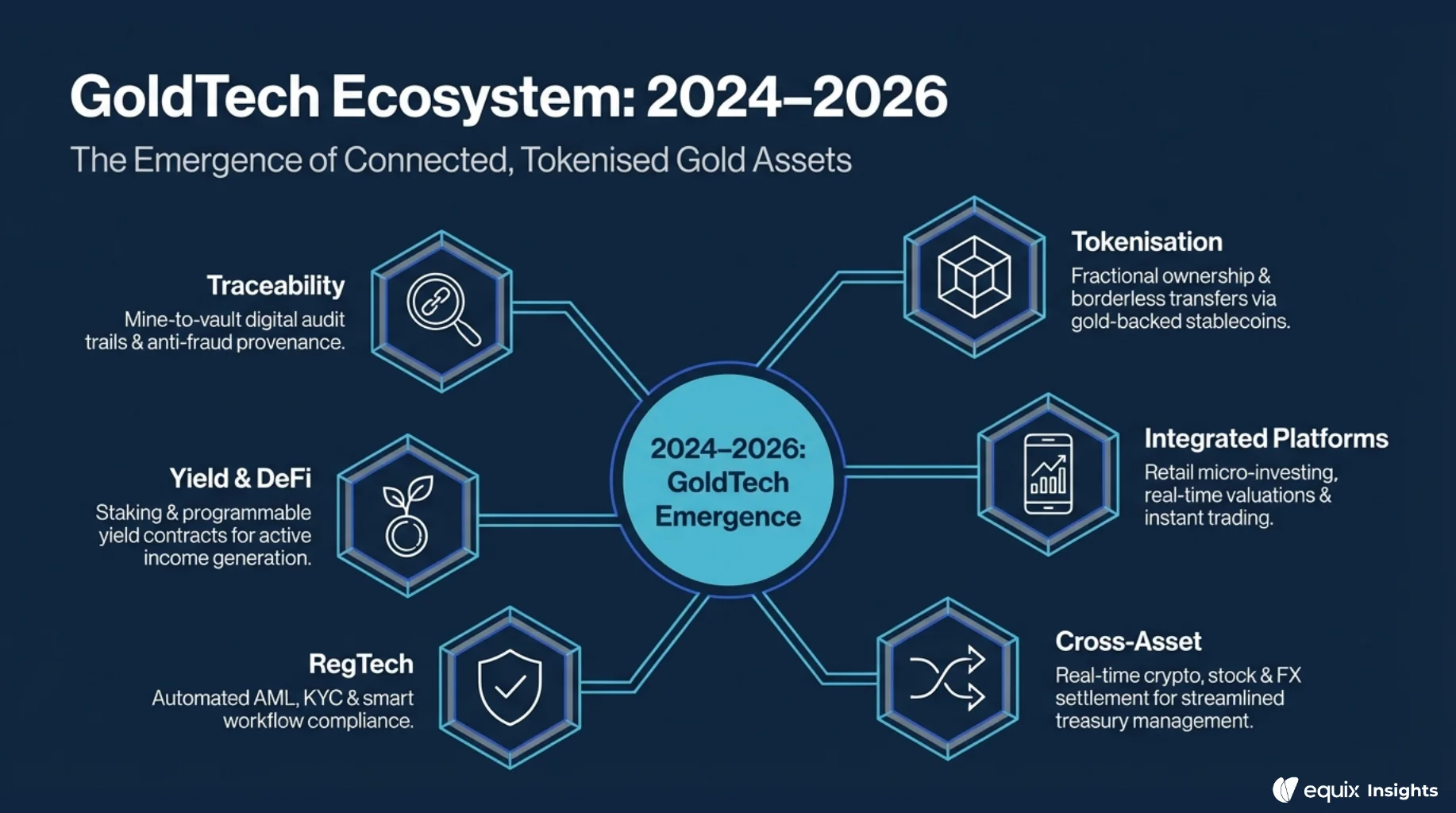
In major economies, tokenisation of physical gold, using blockchain, has moved from pilot projects to billion-dollar markets. These digital representations of gold increase liquidity, democratize ownership (fractional gold), and allow for instant, borderless transactions. Large financial institutions are piloting gold-backed stablecoins as a hedge and a payment instrument for cross-border trade.
2. Transparent, Traceable Supply Chains
Regulatory scrutiny and climate governance drive demand for end-to-end traceability. Major gold refiners and suppliers are onboarding blockchain for provenance, anti-fraud, and “green gold” verification. By 2026, it is likely that full digital audit trails from mine to vault will become a compliance standard in G7 countries and beyond.
3. Integrated Digital Gold Saving & Trading Platforms
Retail investors worldwide are flocking to digital gold savings and trading apps linked to banks and fintechs. These platforms offer micro-investment, real-time valuations, instant sell-out and gold lending, typically integrated with broader digital assets and wealth management products.
4. Yield-bearing and DeFi-Enabled Gold Products
A new generation of gold-backed financial products, including staking, lending, and programmable yield contracts, which are emerging from both banks and decentralized finance (DeFi) platforms. These products seek to transform gold from a store of value into an active, income generating asset comparable to bonds or high-yield savings.
5. Cross-asset Integration and Real-Time Settlement
Advanced GoldTech solutions now interconnect gold with other liquid and digital assets stocks, FX, cryptoenabling seamless portfolio management and real-time, multi-asset settlement. For institutions, this means streamlined hedging, treasury management, and improved risk oversight.
6. Enhanced Regulatory Technology and Global Compliance
With international standards tightening, GoldTech is embedding advanced RegTech tools: automated AML/KYC, smart workflow monitoring, sanction screening, and granular reporting. Global regulators are increasingly open to digital gold innovation, provided full audibility and consumer protection can be demonstrated.
Looking Ahead: Predictions for 2026 – 2030
1. Mainstream Tokenisation and Borderless Gold
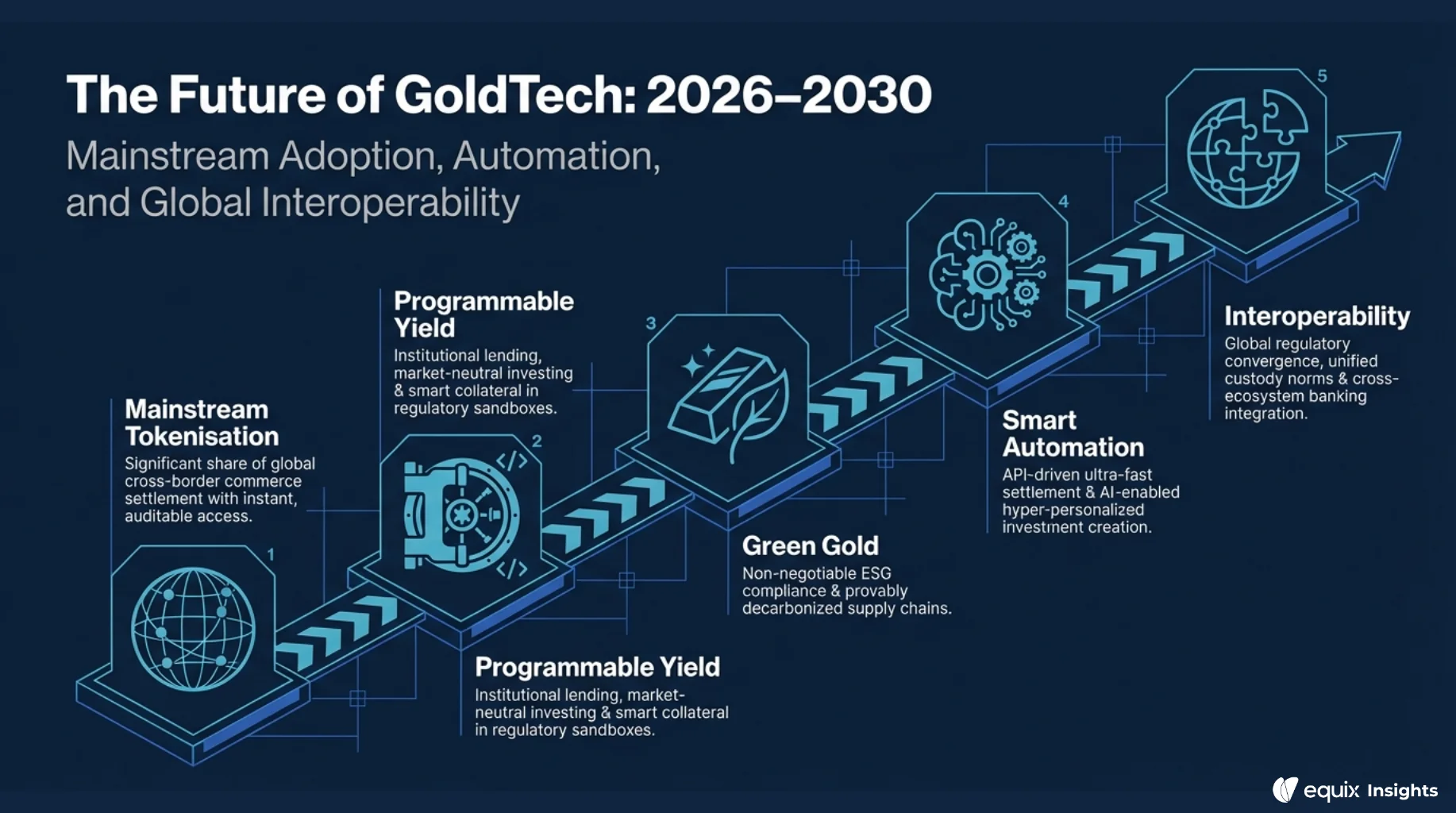
By 2030, tokenized gold (representing physical reserves) is expected to account for a significant share of global gold settlement, especially for cross-border commerce and global investors seeking instant, auditable access and predictable fees.
2. Gold as a Programmable, Yield-Bearing Asset
Yield-bearing and DeFi-linked gold products will evolve, gaining credibility with institutional investors as mechanisms for collateral, lending, and market-neutral investing, potentially supported by regulatory sandboxes in key markets.
3. “Green Gold” and ESG Compliance by Default
ESG, decarbonization, and responsible sourcing will become non-negotiable. Platforms that offer provable, “green” supply chains, and satisfy international sustainability standards, will lead industry adoption and attract premium market segments.
4. Smart Automation and Mass Customization
The next phase is about radical automation: from ultra-fast, API-driven gold settlement networks to AI-enabled, made-to-order investment solutions. GoldTech will enable hyper-personalized product creation, real-time client recommendations, and unified dashboard monitoring for both retail and institutions.
5. Global Regulatory Convergence and Interoperability
Expect closer harmonization between regional regulators, mainstream acceptance of digital gold standards (including custody norms, digital identity, and taxation), and growing interoperability across banking, fintech, and blockchain ecosystems.
For banks and fintechs aiming to capitalize on these trends, deployment speed and regulatory readiness are critical. For example, a leading bank using Vision Gold – a gold trading platform developed by Equix – has digitized their end-to-end gold trading operations, reducing reconciliation effort by 85%, enabling real-time client onboarding, and ensuring every gold transaction meets international auditability standards. Through Vision Gold, institutions are not only “following” global trends, they’re actively shaping the future of GoldTech in their region.
Conclusion: GoldTech as the Future Core of Banking Innovation
The next three years will see accelerated digital transformation in the gold sector, mirroring what fintech has done for banking and securities in the past decade. Banks and FIs that treat GoldTech not just as a bolt-on feature but as a foundational element of their future operating model will be best positioned to lead.
Whether through tokenisation, integrated mobile experience, or regulatory automation, today’s investment in GoldTech is tomorrow’s competitive edge. For forward-looking banks, the question is not “if”, but “how fast” to build for a market where technology, transparency, and trust will define success in gold.
For a personalized roadmap to GoldTech implementation or to discover how Vision Gold enables future readiness for your institution, reach out to Equix Technologies.